
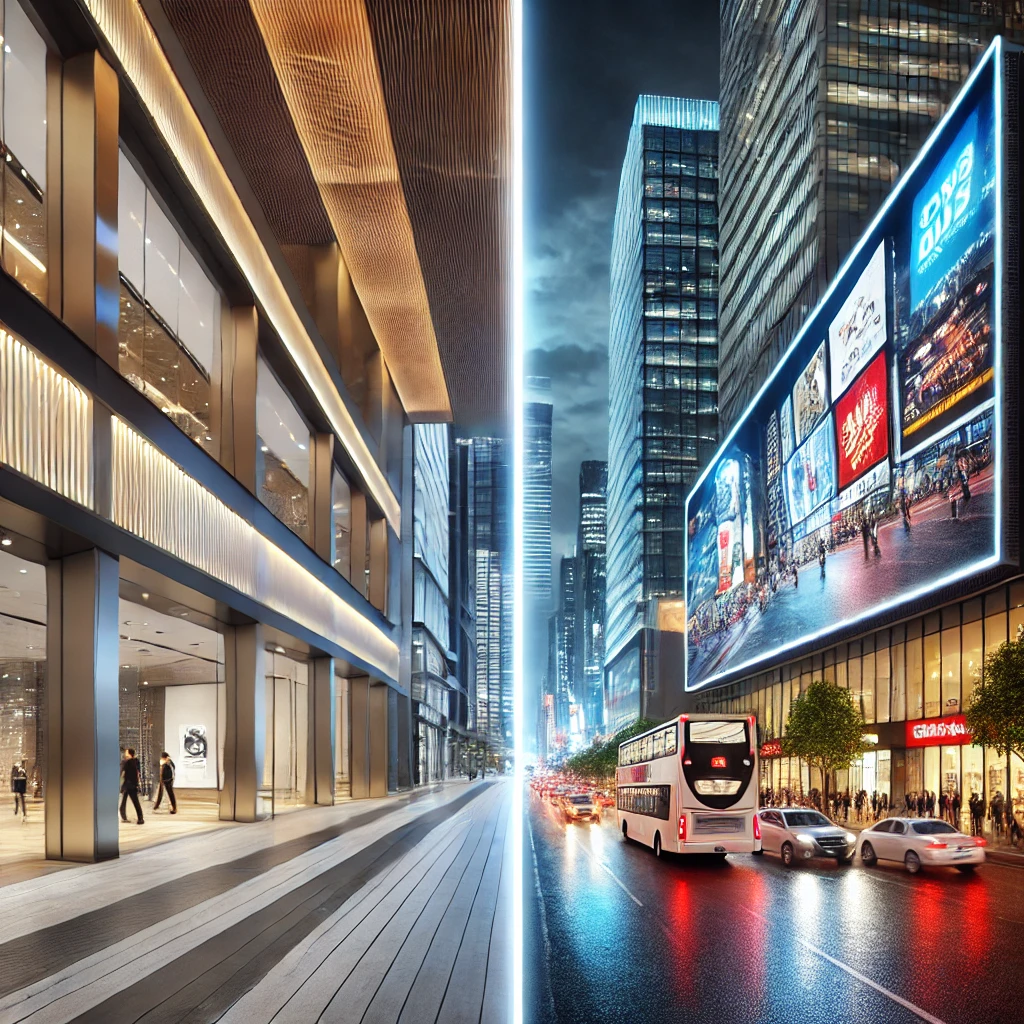
When investing in an LED display, choosing the right type is crucial. The decision between indoor and outdoor LED displays depends on brightness, durability, and application. In this guide, we break down the key differences to help you choose the best solution.
Indoor LED Displays: Best for Controlled Environments
Malls, showrooms, conference halls, and auditoriums.
Higher Resolution & Pixel Density
Indoor LED displays have higher pixel density, making them ideal for close-up viewing in stores, museums, and corporate offices.
Lower Brightness (But Still Vibrant)
Since indoor displays are not exposed to sunlight, they use lower brightness levels, which helps reduce energy consumption.
Sleek & Lightweight Design
These displays are compact, thin, and easy to install in limited spaces.
Outdoor LED Displays: Built for Durability & Visibility
Billboards, stadiums, concerts, and public spaces.
Weatherproof (IP65 Rating & Above)
Outdoor LED screens are designed to withstand rain, dust, and extreme temperatures, making them long-lasting in any environment.
Ultra-High Brightness
Since outdoor screens face direct sunlight, they require 10x higher brightness levels than indoor LEDs to remain visible.
Larger Viewing Angles
Designed for large crowds, outdoor LED screens ensure clear visibility from long distances.
Indoor vs. Outdoor LED Display: Quick Comparison
| Feature | Indoor LED Display | Outdoor LED Display |
|---|---|---|
| Brightness | Lower (500-1500 nits) | Higher (5000+ nits) |
| Resolution | Higher pixel density | Lower pixel density |
| Weatherproof | ❌ No | ✅ Yes (IP65+) |
| Best For | Shops, malls, offices | Billboards, stadiums, events |
Conclusion
Your choice between indoor and outdoor LED displays depends on location, visibility needs, and environmental factors. Luminex LED offers state-of-the-art LED solutions for both indoor and outdoor applications.